7 September 2026
Free customer resource
Guedel Airways — Sizes, Colours and ISO 5364
What a Guedel airway is, how the sizes and colours work, the four colours that changed, and who is trained to use one. Free reference guide from Hayes First Aid.
Why this guide exists
Nine sizes, nine colours — and four of them changed.
A Guedel airway is identified by its colour, so the right one can be picked up at a glance instead of read off the flange. It works well, right up to the moment a wall chart, a training kit and a new delivery disagree with each other.
Four sizes changed colour to comply with ISO 5364:2016, so a box bought a few years ago and a box bought this year can hold the same size in two different colours. Neither is wrong. This guide sets out both, side by side, so nobody has to guess.
If an old colour and a new colour don't match, check the size printed on the flange — the size is the fact, the colour is the shortcut.
000 to 5
to meet the standard
authorised to insert one
Contents
A Guedel airway — also called an oropharyngeal airway (OPA) — is a curved plastic device inserted into the mouth to keep the tongue from blocking the airway in an unconscious patient who has no gag reflex. It's named after Arthur Guedel, the anaesthesiologist who designed the original in the 1930s.
It sits between the teeth (or gums) and the back of the throat, held in place by a flange that rests against the lips. Getting the size right matters — too short and it can push the tongue further back; too long and it can trigger a gag reflex or damage to the throat.
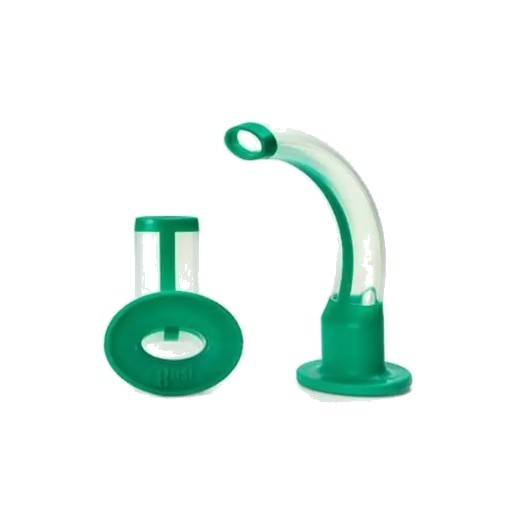
Each size has its own colour so the correct one can be found without reading small print. The size itself is the ISO size — under ISO 5364:2016 that is the nominal length of the airway, designated in centimetres.
| Size | ISO size | Colour | Typical patient | Code |
|---|---|---|---|---|
| 000 | 3.5 | Light green | Neonate | 1000035 |
| 00 | 5.0 | Blue | Infant | 1100050 |
| 0 | 5.5 | Grey | Infant / small child | 1110055 |
| 1 | 6.5 | Brown | Child | 1111065 |
| 1.5 | 7.0 | White | Child / small adult | 1111570 |
| 2 | 8.0 | Green | Small adult | 1112080 |
| 3 | 9.0 | Yellow | Small / medium adult | 1113090 |
| 4 | 10.0 | Red | Medium / large adult | 1114100 |
| 5 | 12.0 | Purple | Large adult | 1115120 |
Sizes, colours and codes as published by Intersurgical for their one-piece Guedel airway range. Sterile variants carry the same code with an S suffix. "Typical patient" is a general guide only — the size for a particular patient is a clinical judgement, not a rule read off an age.
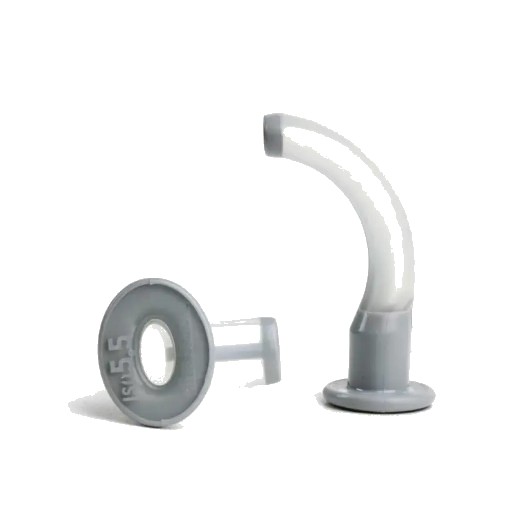
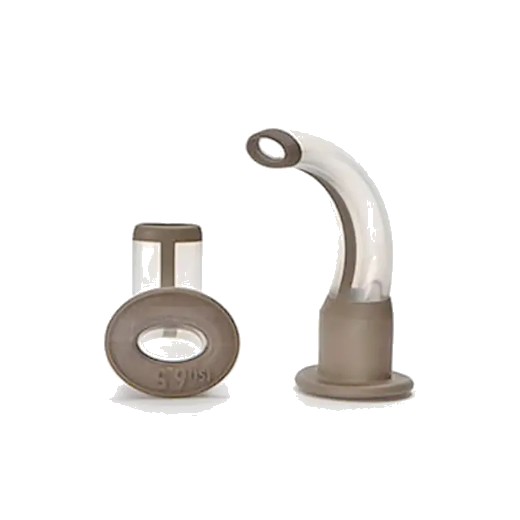
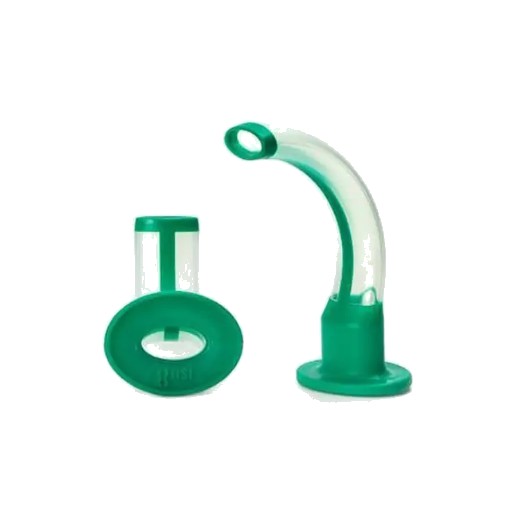
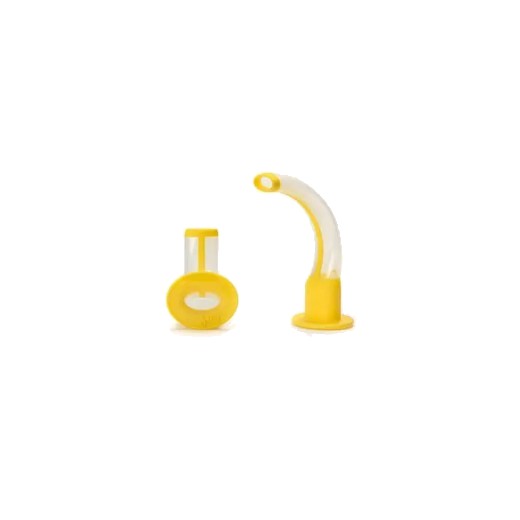
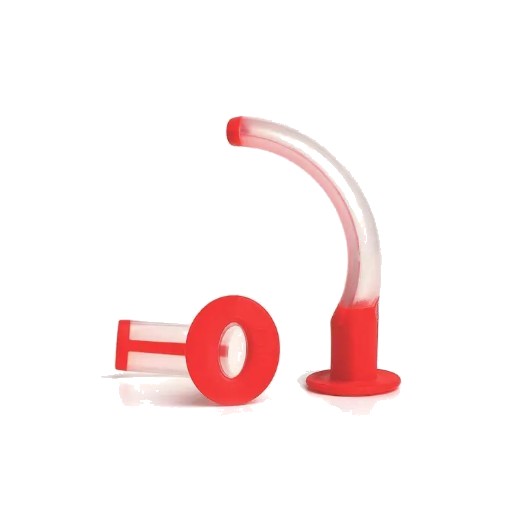
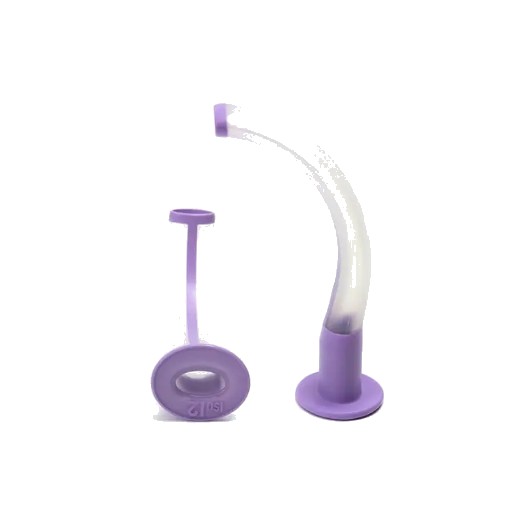
Four sizes changed colour so the range would meet the colour coding specified in ISO 5364:2016. Five sizes did not change. Existing stock in the old colours is the same size it always was — a colour mismatch between an old box and a new one does not mean the wrong size arrived.
| Size | ISO size | Old colour | Current colour |
|---|---|---|---|
| 000 | 3.5 | Pink | Light green — changed |
| 00 | 5.0 | Blue | Blue — unchanged |
| 0 | 5.5 | Grey | Grey — unchanged |
| 1 | 6.5 | White | Brown — changed |
| 1.5 | 7.0 | Yellow | White — changed |
| 2 | 8.0 | Green | Green — unchanged |
| 3 | 9.0 | Orange | Yellow — changed |
| 4 | 10.0 | Red | Red — unchanged |
| 5 | 12.0 | Purple | Purple — unchanged |
The two that catch people out
White moved down a size and yellow moved up one. White used to mean size 1 and now means size 1.5. Yellow used to mean size 1.5 and now means size 3. Anyone reaching for a colour they learned some years ago can pick up the wrong length while being certain they have the right one.
This applies across the range including bulk-packed and sterile variants. The colour to read is the one visible from the flanged end.
ISO 5364:2016 — Anaesthetic and respiratory equipment — Oropharyngeal airways, fifth edition, published 1 September 2016 — is the international standard for these devices. It covers airways made of plastic and/or rubber, including those with reinforcement inserts. It does not cover metal airways.
What that means in a kit
Because the colour is a requirement of the standard rather than one manufacturer's choice, a size in one brand should be the same colour as that size in another. In practice, treat the colour as the shortcut and the printed size as the fact. Stock bought before 2016 predates the current scheme, and not every catalogue in circulation follows it — we have seen ranges listing size 0 as black and size 5 as orange.
Clause references and the scope above are from ISO 5364:2016. Table 2 itself is reproduced in the standard, not here.
Not a basic first aid skill
Under the Pre-Hospital Emergency Care Council's 2021 Clinical Practice Guidelines, the oropharyngeal airway appears in the skills matrix from Cardiac First Responder — Advanced (CFR-A) upwards, and at First Aid Responder, Emergency First Responder, EMT, Paramedic and Advanced Paramedic levels.
It is not in the basic Cardiac First Response or occupational first aid syllabus. An airway that is the wrong length, or inserted without the training that goes with it, can make an obstruction worse rather than better.
So the honest answer to "can anyone use one of these?" is no — and the useful answer is that it depends on which course a person actually holds. If you are stocking these for a team, your training provider can tell you whether your responders' certification covers it.
Where they usually end up
Community First Responder groups, workplace responders who hold responder-level certification on top of first aid, sports and event medical teams, care settings with clinical staff, and ambulance and clinical services. If your kit is a standard workplace first aid kit, an oropharyngeal airway is usually not the item that belongs in it.
These are plastic devices with no expiry driven by a battery or a chemical, so the checks are about the packaging and the label rather than a date. If a flange marking has worn off, the airway has lost the thing that tells anyone what it is — retire it.
| Same as an OPA? | Yes. "Guedel airway" and "oropharyngeal airway" are the same device. OPA is the abbreviation. |
| What do the colours mean? | Each colour is a size. Colour coding by size is required by ISO 5364:2016, and the colour has to be visible from the flanged end. |
| Old or new colours? | Compare the size on the flange against the table in section 03. Four changed: 3.5 pink to light green, 6.5 white to brown, 7.0 yellow to white, 9.0 orange to yellow. |
| Can anyone insert one? | No. In the PHECC 2021 guidelines it sits at CFR-Advanced level and above, not in basic first aid. |
| Is old stock still usable? | The size has not changed, only the colour. Check with your own clinical governance if you hold one; nothing about the device changed. |
| How is the size chosen? | A common teaching method is to hold the airway against the face with the flange at the corner of the mouth and check the tip reaches the angle of the jaw. Measuring from the front teeth to the angle of the jaw has been found somewhat more reliable. Neither is exact — the test is how it performs once inserted, judged by someone trained to judge it. |
Eight of the nine sizes, plus a set of six in a gripsealed bag for a responder kit. ISO size 7.0 — size 1.5, white — is the one we do not currently list. If you need that one, ask and we will source it.
| Product | Size | Colour | SKU | List |
|---|---|---|---|---|
| Guedel airway, size 000 | ISO 3.5 | Light green | 1000035 | €1.00 |
| Guedel airway, size 00 | ISO 5.0 | Blue | 1100050 | €1.00 |
| Guedel airway, size 0 | ISO 5.5 | Grey | 1110055 | €0.75 |
| Guedel airway, size 1 | ISO 6.5 | Brown | 1111065 | €0.75 |
| Guedel airway, size 2 | ISO 8.0 | Green | 1112080 | €0.75 |
| Guedel airway, size 3 | ISO 9.0 | Yellow | 1113090 | €0.75 |
| Guedel airway, size 4 | ISO 10.0 | Red | 1114100 | €0.75 |
| Guedel airway, size 5 | ISO 12.0 | Purple | 1115120 | €0.75 |
| Set of six, sizes 0 to 5, gripsealed bag | ISO 5.5–12.0 | Six colours | OX825 | €4.25 |
List prices at the date of this guide. Order online at www.hayesfirstaid.com, or ring and we will put a kit together with the sizes you actually want in it.
Trading since 2012
Hayes First Aid supplies, trains and maintains — all three, which is why a free guide like this one runs to the clause numbers rather than stopping at the colour chart. If something here does not match what is in front of you, ring us and we will work it out with you.
Next working day delivery to all 32 counties. Order before 12pm Monday to Friday for same-day dispatch, subject to stock.
Castle Demesne, Newcastle West
Limerick, V42 N220, Ireland
Mon–Fri 09:00–17:00
t/a Hayes First Aid
Registered in Ireland No. 510559
VAT IE9824728C